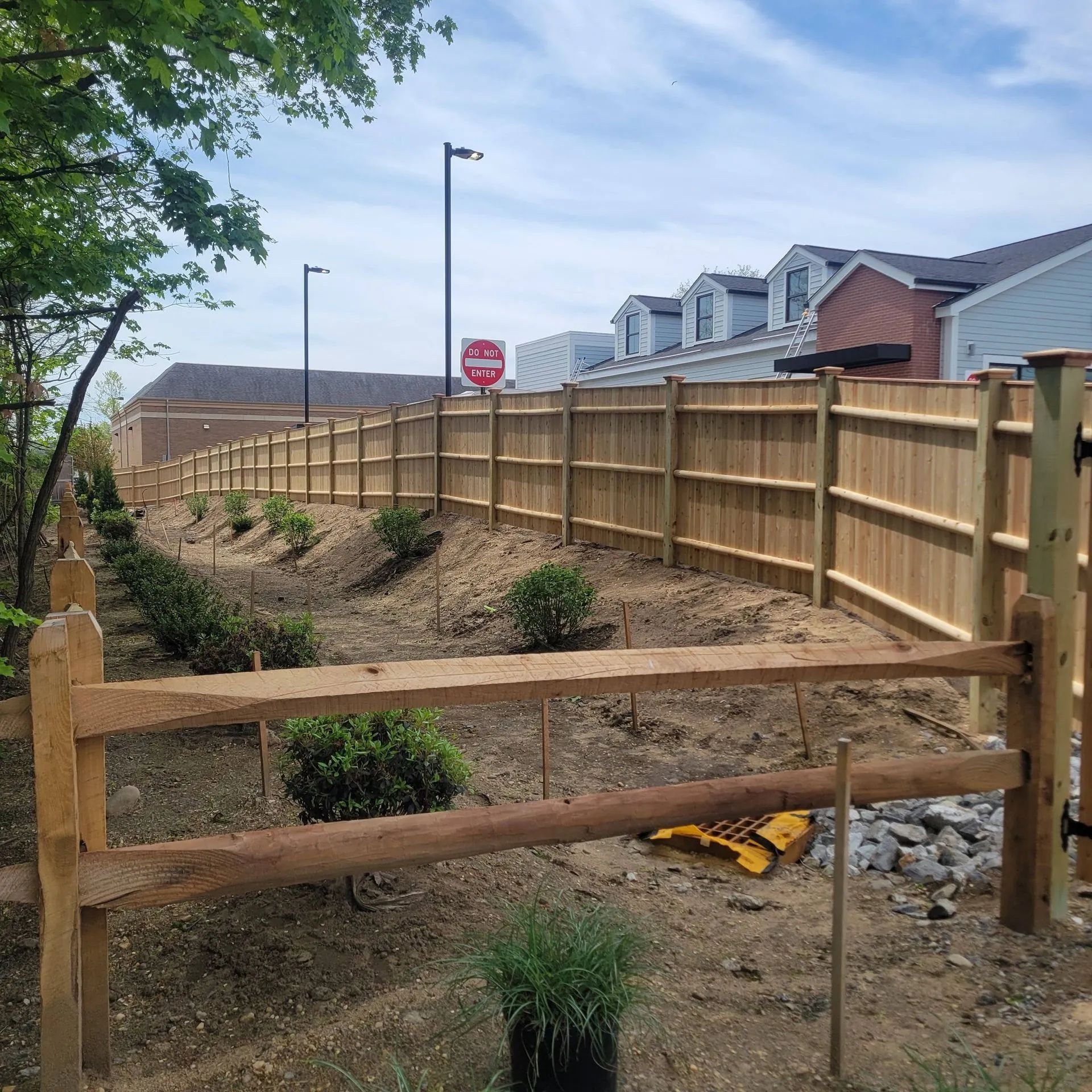
Should You Stain or Seal Your New Wood Fence? How to Choose the Right Finish
Quick Answer: A clear sealer repels moisture and protects against rot, but it does nothing to block ultraviolet light, so an unstained fence still fades and grays within months. A stain does the same moisture-blocking job while also shielding the wood from UV damage, and the more pigment it carries, the more protection and the less natural grain shows through. New cedar generally needs two to four weeks to dry enough to accept either product, while pressure-treated pine needs longer, since it starts out saturated with a water-based preservative. The real test isn't a date on the calendar — it's whether water sprinkled on the wood soaks in within a few minutes or beads up on the surface. For most new wood fences, a semi-transparent or semi-solid stain gives the best balance of UV protection, moisture resistance, and a finish that still looks like wood.
Your fence crew wrapped up on a Friday afternoon, and by Saturday morning the new cedar boards are already calling for attention. The wood still smells fresh. The color's warm and even, straight off the truck. It's tempting to grab a sprayer and lock that look in before the weekend's over.
That instinct makes sense. It's also the fastest way to end up with a blotchy, uneven finish that needs stripping and redoing within a year.
Getting the first finish right on a new
wood fence comes down to two decisions: what product to use, and when the wood is actually ready for it. Skip either one and even a premium stain or sealer won't do its job.
Sealer or Stain: They Don't Do the Same Job
People use "sealing a fence" and "staining a fence" like they're interchangeable. They're not. The two products solve different problems, and picking the wrong one for your yard leaves part of the job undone.
Sealers Are Built Around Moisture, Not Color
A clear or lightly tinted sealer creates a water-repellent barrier that protects wood fibers from moisture, fungal growth, and decay. However, it provides little UV protection, so sunlight eventually causes fading and graying.
Stains Add UV Protection to Moisture Defense
Quality stain repels water while its pigments absorb and scatter harmful UV rays before they damage lignin. This dual protection helps wood retain its color longer, although stain generally costs more and requires careful application.
Opacity Is a Third Decision
Stains range from clear to solid, with increasing pigment and UV protection. Clear options preserve grain but protect less, while semi-transparent and semi-solid choices balance color, durability, and natural texture for most new fences.
Oil-Based or Water-Based: The Second Decision
Once you've settled on stain versus sealer, and roughly how much pigment you want, the product's base is the next fork in the road. It matters more than the label suggests.
Oil-Based Formulas Penetrate Deeper and Dry Slower
Oil carries pigment deeper into wood fibers, creating an even finish with fewer lap marks. It typically lasts longer between recoats than water-based stain, but brings stronger odors, slower drying times, and generally higher costs during application and maintenance.
Water-Based Formulas Dry Fast and Carry Fewer VOCs
Water evaporates quickly, helping stains set faster and reducing exposure to dust, pollen, or unexpected rain. They contain fewer VOCs and simplify future touch-ups, but usually penetrate less deeply, potentially requiring more frequent recoating on sun-exposed fences.
Wood Species Plays Into This Too
Cedar performs well with either stain base because its natural rot resistance and tight grain reduce the need for deep penetration. Pressure-treated pine often pairs well with oil-based stain after drying, helping protect against checking and cracking as the wood continues drying.
Why Waiting Matters More Than Most Homeowners Expect
New wood isn't ready for a finish coat the day it goes into the ground. Not cedar, not pressure-treated pine. Rushing this step is where most first-time finishing jobs go sideways.
Cedar Needs Time for Surface Moisture and Mill Glaze to Clear
Freshly milled cedar has mill glaze, a smooth surface layer, plus internal moisture that can prevent proper stain bonding. Most fences need two to four weeks of exposure, longer during humid weather. For stronger penetration, moisture content should generally drop below about 13 percent before staining begins.
Pressure-Treated Pine Takes Longer, but Guidance Has Changed
Older treated lumber could remain wet for six months, leading to the traditional “wait a year” advice. Newer treatments often dry faster, with manufacturers commonly recommending staining around six weeks after installation. Still, moisture matters more than timing. If pine feels damp or unusually heavy, wait longer before applying stain.
Tip: Skip guessing and run the water-bead test before you commit to a finish date. Splash a cup of clean water on a few different boards across the fence, not just one spot. If the water beads up and sits on the surface, the wood is still too wet, or a surface glaze is blocking absorption, and needs more drying time. If it soaks in within a few minutes, the fibers are ready to pull stain or sealer in deep rather than leaving it sitting on top.
Reading Your Fence's Readiness the Right Way
A few more conditions need to line up before that finish coat goes on, beyond the water-bead check. Skip them and the problems don't show up right away — they show up weeks later.
The Weather Window Matters as Much as the Wood’s Dryness
Stain and sealer need dry, moderate weather to cure properly. Low humidity and temperatures between roughly 50 and 90 degrees Fahrenheit allow absorption before rain, dew, or extreme heat interferes. Applying stain before a storm or during scorching conditions can cause an uneven finish, even when the wood is properly dried.
Cleaning Comes Before Testing, Not After
Dirt, mill residue, and surface debris can interfere with the water-bead test and become trapped beneath stain. Start with a stiff-bristle brush and wood-safe cleaner, then rinse thoroughly. Allow about 24 hours of drying before testing. A clean, dry surface gives you a more accurate indication of staining readiness.
Failing the Test Isn’t the End of the World
If water continues beading after the expected waiting period, especially on treated lumber, simply allow more outdoor drying time rather than switching products. Stubborn mill glaze on cedar may respond to light sanding. Pressure-treated wood generally needs additional weeks or months for preservative moisture to escape before staining.
Warning: Staining or sealing wood before it's actually dry does more harm than doing nothing at all. Trapped moisture under a film-forming stain or sealer can cause blistering, peeling, and uneven color within the first year, and on pressure-treated lumber it can also interfere with how the preservative continues curing in the wood. If you're not sure whether a board is ready, wait another week and retest rather than finishing on a fixed date.
Getting the Application Right the First Time
Once the wood passes the dryness check and the forecast cooperates, the application itself decides how even and long-lasting the finish turns out.
Start With Posts, Then Work the Pickets End to End
Most professional jobs begin with the vertical posts before moving section by section along the fence. This keeps the working edge wet, helping prevent visible lap marks where dried stain meets freshly coated wood.
Back-Brushing Matters Even With a Sprayer
Spraying applies stain quickly, but back-brushing immediately works it into the wood grain. This pushes product deeper into the fibers instead of leaving excess material on the surface, reducing pooling and blotchy results.
Two Coats Beat One, Within Reason
Most manufacturers recommend a second coat after the first absorbs, often after about an hour depending on conditions. The additional coat fills missed areas and extends durability, while excessive coats can remain tacky and uncured.
Give the Finish Real Time to Cure, Not Just Dry
Stain may feel dry within hours, but full curing takes longer and depends on temperature and humidity. Keep objects away from the fence and sprinklers off it for at least one or two days.
What This Looks Like on a North Shore Fence
Coastal Massachusetts throws in a variable most generic staining guides skip entirely, and it shapes both timing and long-term upkeep.
Salt Air and Humidity Slow the Drying Clock
Coastal properties face higher humidity and salt-laden air, which can extend drying times. A cedar fence ready for staining after two weeks inland may need closer to four weeks near exposed ocean conditions.
Freeze-Thaw Cycles Make That First Finish Matter More
Proper staining helps resist surface cracks that allow winter moisture inside and expand during freezing. This protection becomes especially valuable in New England, where repeated freeze-thaw cycles can contribute to warped, split, or damaged fence boards.
Recoat Intervals Run Shorter in Milder, Drier Climates
Coastal New England fences often need fresh stain or sealer every one to two years because of sun, humidity, and salt exposure. Choosing higher-build stain and applying it correctly can extend recoat intervals.
Frequently Asked Questions
How soon after a fence is installed can you stain or seal it?
Cedar usually needs two to four weeks of open air drying, while pressure treated pine needs roughly six weeks or longer. The water bead test beats calendar guessing every time.
Is it better to stain a fence or use a clear sealer?
Stain wins in most cases. It blocks both moisture and UV damage, while a clear sealer only handles moisture and leaves the wood exposed to fading and graying over time.
Should you use an oil-based or water-based stain on a new fence?
Oil-based stains penetrate deeper and last longer between recoats. Water-based stains dry faster and carry fewer fumes. Cedar handles either quite well, while treated pine usually pairs best with oil.
How can you tell if new wood is dry enough to stain?
Splash water on several boards, not just one spot. If it soaks in within minutes, the wood is ready. If it beads on the surface, it needs more drying time.
Does a solid stain protect a fence better than a semi-transparent stain?
Yes, in raw protection. Solid stains carry the most pigment for the strongest defense, but they hide most of the wood's grain, which is why semi-transparent stains remain more popular.
Do you need to seal both sides of the fence boards?
Yes, whenever both sides are reachable. Moisture and sun hit both faces of a board, and leaving one side bare creates the uneven moisture that leads to cupping and warping.
Getting Your New Fence's First Finish Right
The choice between stain and sealer, or oil and water, matters less than whether the wood is truly ready before either one goes on. A fence that passes the water-bead test, dries during a stable weather window, and receives two even, back-brushed coats will hold its color and resist warping for years. Skipping any of those steps undoes the value of even the best product on the shelf, while a little patience pays off with every season the fence holds its color.
Mass Fence, LLC
has spent 10
years installing and finishing wood fencing for homeowners across Saugus, MA, and the surrounding North Shore, working through cedar, pressure-treated pine, and coastal conditions that test every coat of stain differently than they would inland. That experience shapes how the team reads a board's readiness and matches the finish to the wood, the exposure, and the climate. A fence finished at the right time, with the right product, tends to reward that care for years before it ever needs another coat.